Ilm Journal
All articles
Short reads, deep dives and fresh perspectives, across every subject.
Islamic History

When Baghdad, Not Europe, Was the World's Science Capital
While much of Europe was in its early medieval period, Baghdad's House of Wisdom housed roughly 400,000 books, employed a small army of translators, and gave the world the word "algebra." For nearly 200 years, it was arguably the single greatest concentration of scientific knowledge on the planet — until the Mongols destroyed it in 1258.

The Woman Who Founded the World's Oldest University
In 859 CE, a woman named Fatima al-Fihri spent her entire inheritance building a mosque in Fez, Morocco. It grew into the University of al-Qarawiyyin — recognized today by UNESCO and Guinness World Records as the oldest continuously operating, degree-granting university on Earth, still teaching students more than 1,160 years later.
Geography

The Mariana Trench vs. Mount Everest: What "Deepest" Actually Means
Mount Everest is the highest point above sea level, and the Mariana Trench holds the deepest, but neither title is as simple as it sounds. Depending on how you actually define "highest" or "deepest" — from sea level, from Earth's center, or from a mountain's true base — the record holders change completely.
The Ground Beneath You Is Moving Right Now
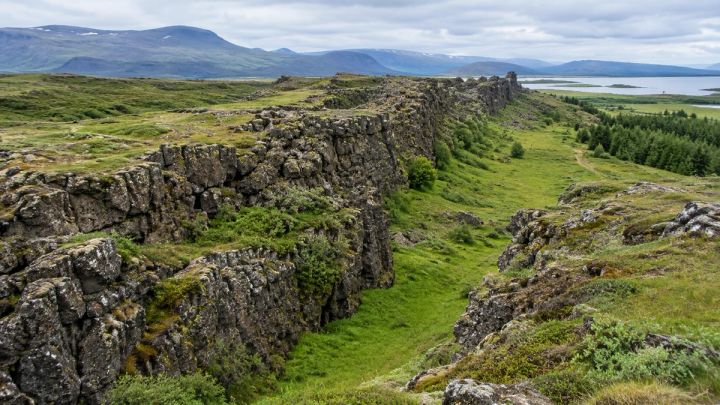
Whatever you're standing on right now is drifting — slowly, constantly, and measurably, at a speed scientists compare to how fast your fingernails grow. It took decades for scientists to accept this, and GPS satellites now track it happening in real time, down to the millimeter.
Physics
Empty Space Might Not Be Empty, Or Smooth
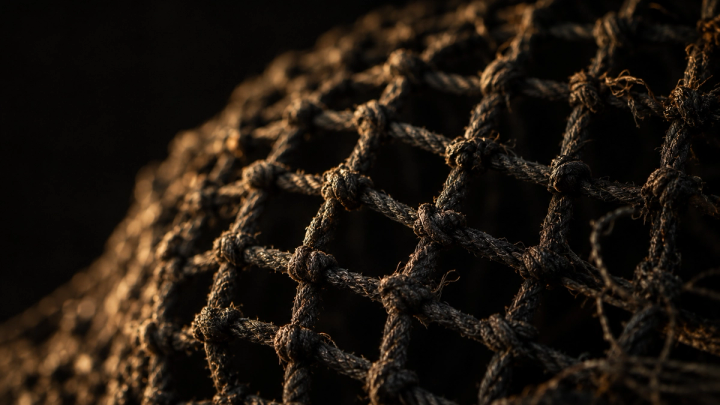
Two of physics' most trusted theories — the one that explains gravity and the one that explains atoms — flatly contradict each other once you zoom in far enough, leaving no real answer for what's happening inside a black hole. One proposed fix says space itself isn't smooth at all. It's made of tiny woven threads, with a smallest possible size that nothing can go below.
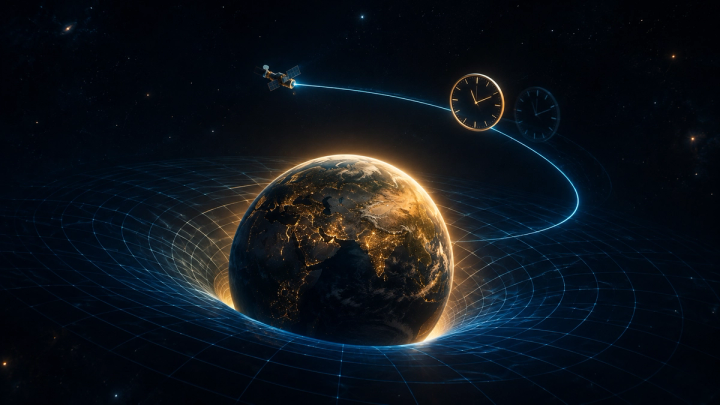
There Is No Such Thing as "Right Now"
Every GPS satellite in orbit carries a clock that engineers deliberately mistune before launch — because left alone, it would drift from Earth time by 38 microseconds a day. Behind that fix is one of the strangest proven facts in physics: there's no single "now" shared by everyone in the universe, only clocks running at different speeds depending on how fast you're moving and how close you are to a strong gravity source.
Biology
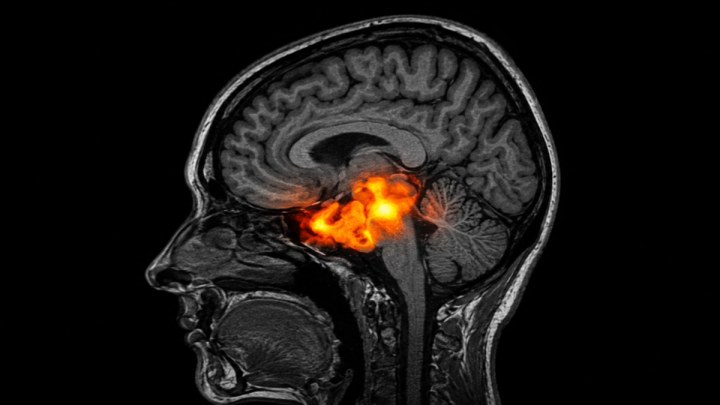
Why Déjà Vu Happens — The Leading Theories
Almost everyone has felt it: a brand new moment that suddenly feels like it's already happened. Scientists have spent decades trying to explain why — and the leading theory today isn't a glitch in your memory at all. It might be proof that your brain's memory-checking system is working exactly as it should.
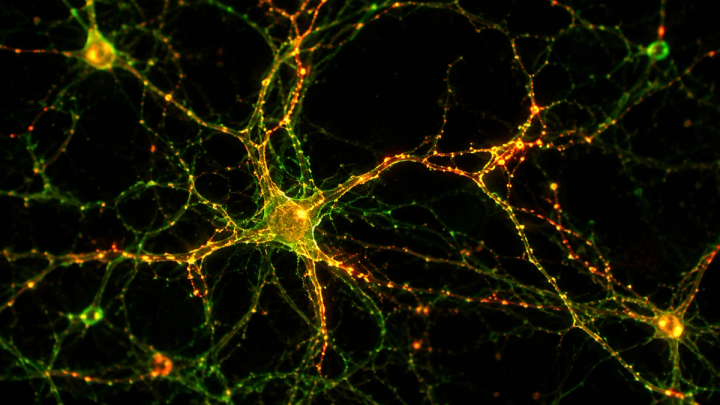
Your Brain Is Rewiring Itself Right Now
Every time you learn something new, your brain physically changes shape — not as a figure of speech, but as a measurable fact confirmed by MRI scans of London taxi drivers and people who taught themselves to juggle. The more a mental path gets used, the more solid it becomes, and the less it's used, the more it fades.
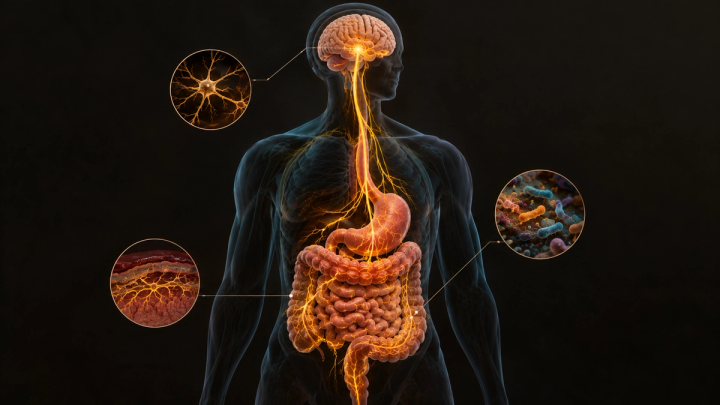
You Are Not One Mind. You're Two Nervous Systems Negotiating.
Your intestines contain their own independent nervous system, with more neurons than your entire spinal cord, producing most of your body's serotonin and sending most of its messages upward, not down. Real experiments — including swapping gut bacteria between mice — show this second nervous system can directly change stress hormones and even personality-like behavior.
Artificial Intelligence
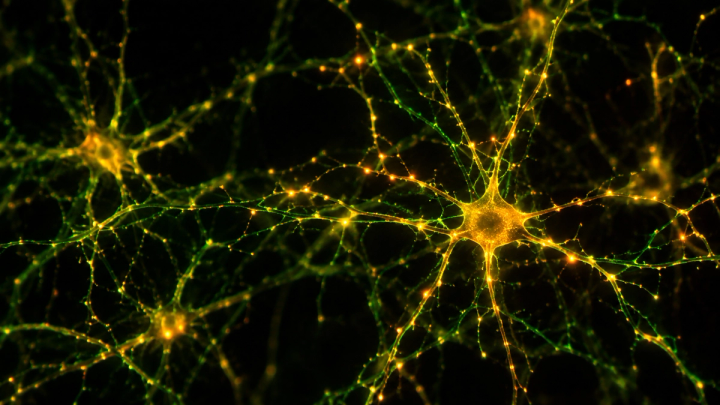
How Does a Neural Network Actually "Learn"?
An AI model doesn't "understand" anything when it starts training — it's just a huge collection of random numbers, guessing blindly. A single algorithm from 1986, run millions of times over, is what actually turns that randomness into something that can write sentences, recognize faces, or beat a grandmaster at chess.
AI Hallucinations: The Specific Reason Models Confidently Make Things Up
When researchers asked a leading AI chatbot for one of its own creators' PhD dissertation title, it confidently gave three different wrong answers. According to OpenAI's own 2025 research, this isn't a bug that will simply go away with a bigger model — it's a direct, almost mathematically guaranteed result of how these systems are trained and graded.
Philosophy

Is a "White Lie" Ever the More Ethical Choice?
Telling a friend their haircut looks great when it doesn't seems harmless — but philosophers have spent centuries disagreeing about whether any lie, however small or well-intentioned, can ever be genuinely justified. One of history's most rigorous ethical thinkers said no, without exception, even to save a life.

The 300-Year-Old Philosophical Fight Now Shaping AI Policy
Should a self-driving car swerve to save five pedestrians if it means killing its own passenger? The answer depends on which of two centuries-old philosophical positions you hold — and both are actively being coded into the moral logic of real autonomous systems today.
Economics

Cognition

"Fail Fast": Where the Phrase Actually Came From, and What It Really Means
"Fail fast" has become a Silicon Valley cliché for "just try things and don't worry about failing." But the phrase actually has two separate, more technical origins — one in software engineering, one in startup strategy — and the person most associated with popularizing it in business now says he hates how it's commonly used.

The IKEA Effect: Why We Overvalue Things We Built Ourselves
In a 2011 study, people were willing to pay 63% more for a plain storage box they'd assembled themselves than for an identical, pre-built version. The effect held even when their assembly job was clumsy — proof that simply putting in effort, regardless of skill, is enough to make people fall for their own creations.