
Why Déjà Vu Happens — The Leading Theories
Team Ilm Ora · 12 September 2026
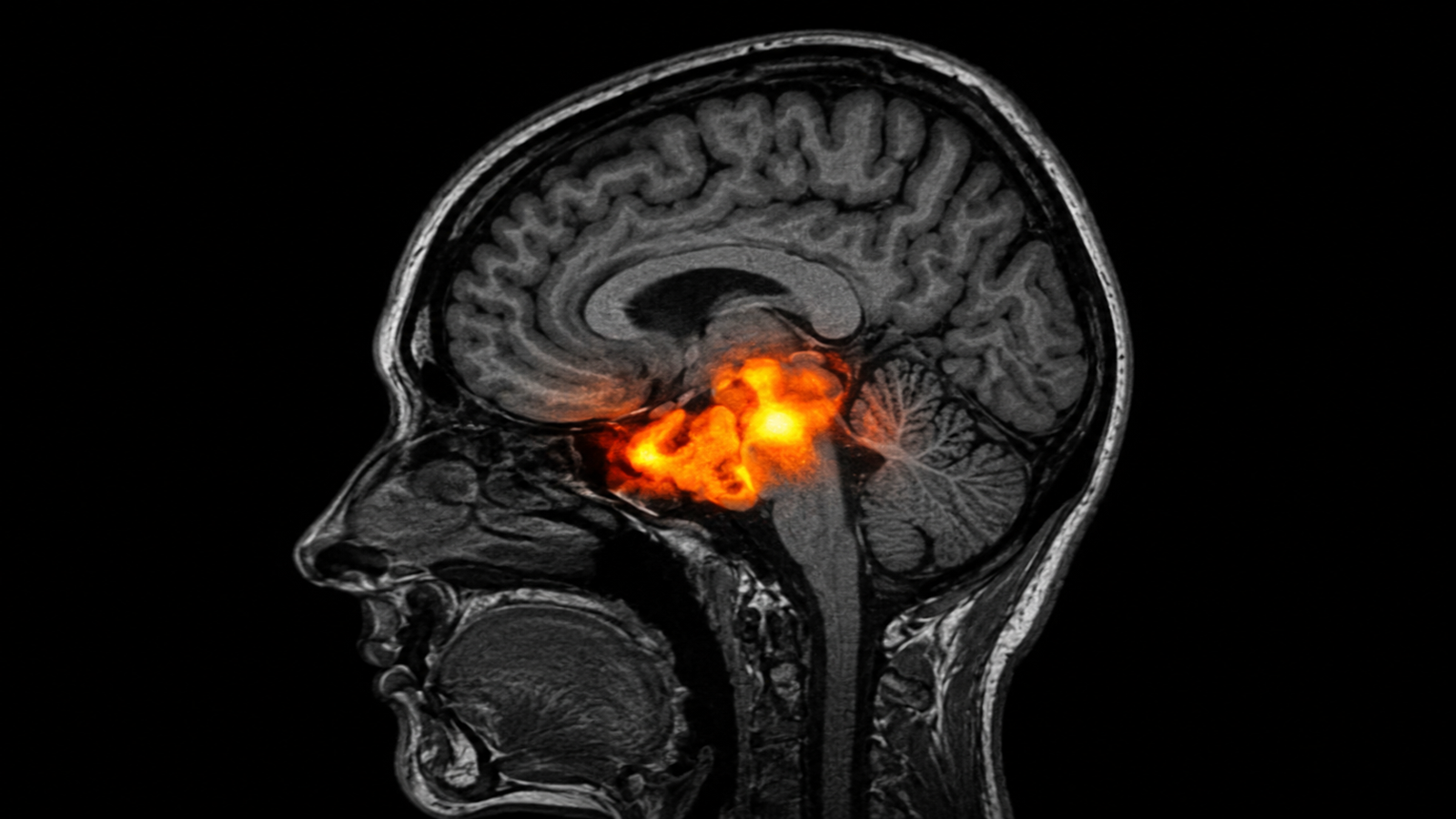
You walk into a room you've never been in, and for a few unsettling seconds, you feel completely certain you've stood in this exact spot before. Scientists have a name for that feeling, several competing explanations for why it happens, and — as of a 2016 brain-scanning study — a genuinely surprising answer for what might really be going on.
A Feeling Almost Everyone Has, and No One Can Predict
Déjà vu — French for "already seen" — is the eerie sensation that something happening to you right now has happened before, even though you know, logically, that it hasn't. It's common: most people experience it at some point, often more frequently in young adulthood, tapering off with age. It's also maddeningly hard to study directly in a lab, because nobody can predict exactly when it will strike, and it typically lasts only a few seconds.
For a long time, that made déjà vu more of a topic for late-night conversations than serious neuroscience. That's changed. Researchers have found ways to reliably trigger something very close to it under controlled conditions, and a clearer picture has started to form.
The First Real Clues: Electrical Stimulation of the Brain
Some of the earliest scientific insight into déjà vu came from a very unusual source: brain surgery performed on fully awake patients. Starting in the 1950s, neurosurgeon Wilder Penfield operated on patients with severe epilepsy, and because the brain itself has no pain receptors, he could keep them awake and talking while he touched different areas of exposed brain tissue with a mild electrical probe, mapping out what each region did.
When Penfield stimulated a region called the temporal lobe — specifically areas involved in memory — some patients spontaneously reported a strong feeling of déjà vu, as if they were suddenly reliving something they'd already experienced. This told scientists two important things: déjà vu has a real, physical location in the brain rather than being purely psychological, and it's connected to the brain's memory system specifically, centered on a region called the medial temporal lobe, which includes the hippocampus and nearby structures involved in recognizing familiarity.
Theory One: A Mismatch Between Two Memory Systems
One of the most well-supported modern explanations comes from psychologist Anne Cleary at Colorado State University, who has spent much of her career finding ways to trigger déjà vu directly in the lab. Her explanation is called the Gestalt familiarity hypothesis ("Gestalt" here just means the overall shape or pattern of something, not its individual details).
The idea: your brain has two somewhat separate memory processes. One is recollection — consciously remembering a specific past event, with details attached (where, when, who was there). The other is familiarity — a vaguer, faster sense that something is recognizable, without necessarily remembering why. Cleary's research suggests déjà vu happens when the overall layout of a new scene — the general shape and arrangement of a room, say, not any specific object in it — closely resembles a scene you genuinely encountered before, closely enough to trigger that fast "familiarity" system, even though you can't consciously recall the actual earlier memory it's based on. Your brain says "I know this" without being able to say why, and the mismatch between those two signals is exactly what makes déjà vu feel so unsettling.
Theory Two: A Memory-Checking System Working Correctly
Perhaps the most interesting recent twist flips the entire framing. In a 2016 brain-imaging study, cognitive neuroscientist Akira O'Connor and colleagues used an MRI scanner to watch people's brains while artificially inducing déjà-vu-like sensations. If déjà vu were really about the memory system misfiring — accidentally retrieving something as if it were real — you'd expect to see activity in memory-related brain regions like the hippocampus.
That's not what they found. Instead, the brain activity centered on regions involved in decision-making and error-checking — areas like the medial prefrontal cortex and the anterior cingulate cortex, both associated with monitoring for conflicts or inconsistencies, rather than storing or retrieving specific memories. The interpretation this points toward is almost the opposite of what most people assume: déjà vu might not be your memory system glitching and generating a false memory at all. It might be your brain's fact-checking system doing its job correctly — noticing a false signal of familiarity coming from somewhere else in the brain, flagging it, and essentially saying "hold on, something doesn't add up here." Under this view, déjà vu is evidence your memory system is working well, not a sign that something's gone wrong with it.
The Prophecy Feeling — Tested, and Debunked
Many people who experience déjà vu describe an added layer to it: a fleeting sense that they can predict exactly what happens next, as if the moment isn't just familiar but somehow already scripted. Cleary specifically tested whether this feeling carries any real predictive power, using virtual reality scenes designed to trigger déjà vu, then asking participants, in that exact moment, what they thought would happen next.
The result was clear: people experiencing déjà vu were no more accurate at guessing what came next than people simply guessing at random. The sense of "knowing what happens next" is a genuine, strongly felt experience — but it carries zero actual predictive information. It's a feeling generated by the brain, not a preview of the future. Understanding this distinction is exactly why some people are drawn to supernatural explanations for déjà vu (past lives, precognition) — the sensation itself is so specific and strange that it feels like it must mean something more than an ordinary memory quirk, even when the evidence says otherwise.
Where the Science Currently Stands
There isn't yet one single, universally agreed-upon explanation for déjà vu — and that's a fair, honest place for the science to be, given how difficult the phenomenon is to capture and study. What's reasonably well supported across multiple lines of evidence: it originates in the brain's temporal lobe memory circuitry, it likely involves some kind of mismatch or conflict between a fast, vague sense of familiarity and the absence of an actual specific memory to explain that familiarity, and the accompanying "I know what happens next" feeling — however convincing it feels in the moment — is not a real prediction.
The most surprising theory of déjà vu isn't that your memory glitched and invented something fake. It's that your memory system may have just caught its own mistake in real time — which would make that eerie feeling a sign your brain is working correctly, not a sign that something's wrong.