
Your Brain Is Rewiring Itself Right Now
Team Ilm Ora · 12 September 2026
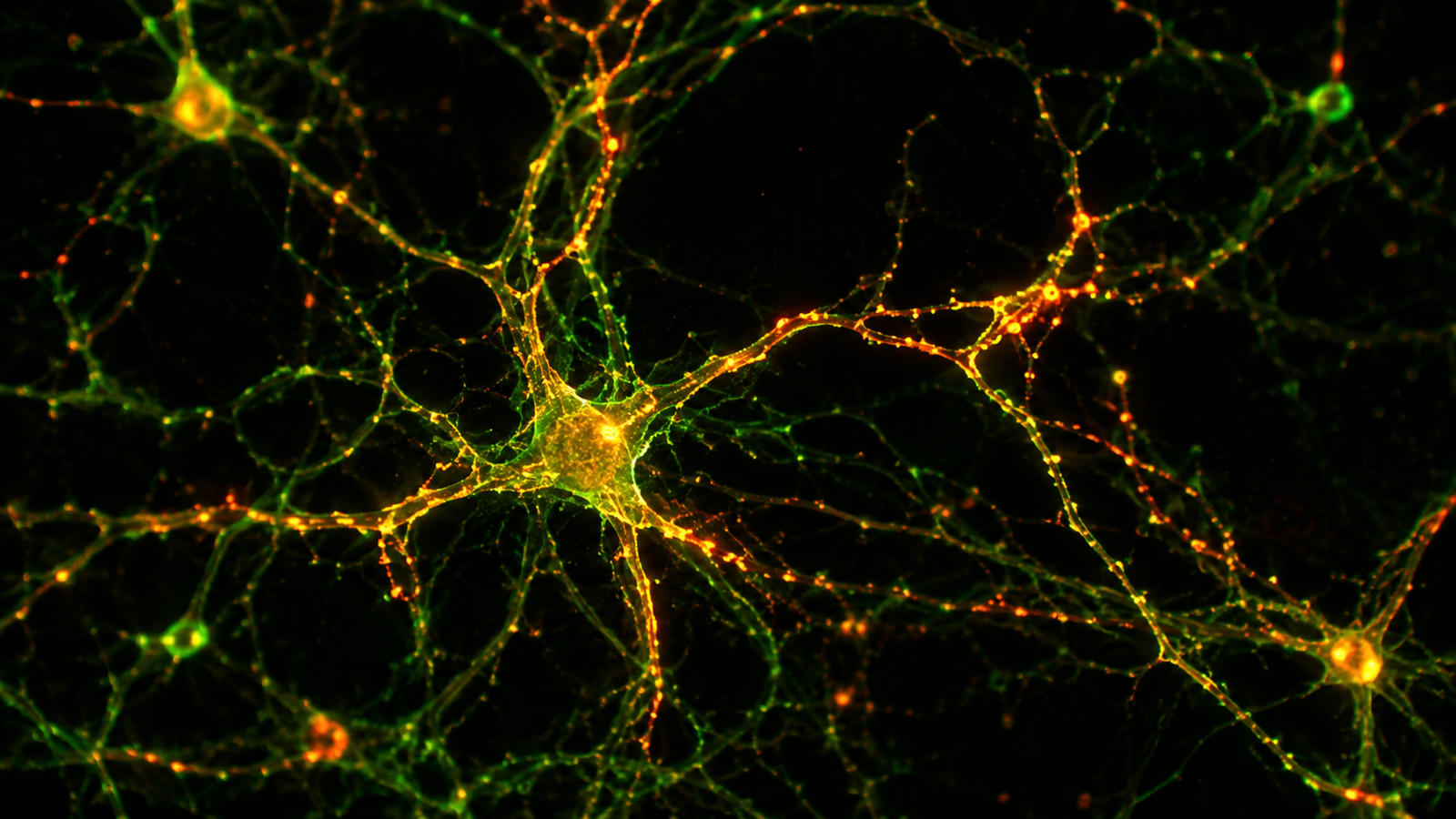
Somewhere in your brain, right now, reading this sentence is very slightly rearranging the physical wiring inside your skull. That's not a metaphor. It's been measured, photographed, and repeated in labs for decades.
The Old Idea This Overturned
For a long time, scientists believed the adult brain was basically finished — that after childhood, its structure was locked in, and all you could really do was use what you already had, the same way you can't grow a new bone once you're fully grown. This turned out to be wrong. The brain keeps physically changing itself in response to what you do and learn, well into old age. Scientists call this ability neuroplasticity — "plastic" here meaning bendable and changeable, not the material.
The basic idea is simple, even if the biology behind it isn't: use a mental pathway often enough, and your brain makes it stronger and more efficient. Stop using it, and your brain lets it fade. Your brain isn't a fixed machine. It's closer to a path through a field — the more feet that walk it, the more clearly it's carved into the ground, and the more it grows over if nobody uses it.
Where the Idea Started: "Neurons That Fire Together, Wire Together"
In 1949, a psychologist named Donald Hebb proposed something specific: if one brain cell (a neuron) helps repeatedly trigger another one, the connection between them — called a synapse — should get stronger over time. This later got summarized in a much catchier way: "neurons that fire together, wire together." At the time, this was just an educated guess. Nobody had actually caught it happening in a real brain.
That changed in 1966, when a researcher named Terje Lømo, working in a lab in Oslo, was studying the hippocampus (a brain region central to memory) in rabbits. He zapped a bundle of nerve fibers with a brief burst of rapid electrical pulses, then checked how strongly the receiving neurons responded afterward. What he found was that they responded more strongly — not just for a few seconds, but for hours. The connection had genuinely gotten stronger just from being used intensely. In 1973, Lømo and a colleague named Tim Bliss published the full experiment and gave this effect a name: long-term potentiation, usually just called LTP. It's now considered one of the core biological mechanisms behind how learning and memory actually work at the level of individual brain cells. Hebb's 1949 guess had been caught in the act, more than twenty years later.
Proof You Can See: London's Taxi Drivers
The clearest large-scale human proof of neuroplasticity came from an unlikely source: London cab drivers.
To get a London taxi license, drivers have to pass a notoriously brutal test called "The Knowledge" — memorizing the layout of over 25,000 streets and thousands of landmarks, a process that typically takes years. In a study published in 2000, neuroscientist Eleanor Maguire used MRI scans to compare the brains of licensed taxi drivers against people who didn't drive taxis. The result: taxi drivers had a noticeably larger posterior hippocampus — the back portion of the memory-and-navigation part of the brain — and the longer someone had been driving a taxi, the larger that region tended to be.
Here's the detail that really nails down cause and effect: in a follow-up study, Maguire compared taxi drivers to London bus drivers. Bus drivers also spend all day navigating central London — but only along a small number of fixed, memorized routes, rather than freely calculating a new path between any two points on demand, the way taxi drivers constantly do. Bus drivers did not show the same hippocampal growth. It wasn't just "driving in London a lot" that changed the brain. It was the specific mental demand of constantly building and rebuilding detailed mental maps that did it.
Proof That It's Reversible: The Juggling Study
If the taxi driver study shows practice can grow a brain region, a second study shows just as clearly that the change goes away again once the practice stops.
In a 2004 study, researcher Bogdan Draganski and colleagues took a group of adults who had never juggled before, scanned their brains, then taught them a basic three-ball juggling routine over about three months. After training, MRI scans showed a measurable increase — about 3% — in gray matter volume in a brain region called hMT/V5, an area known for processing visual motion (exactly the kind of skill juggling depends on: tracking moving objects). Then came the second half of the experiment: the same people stopped practicing juggling, and were scanned again three months later. The extra gray matter had partly shrunk back down, though it hadn't returned completely to where it started.
The takeaway from both studies together: the brain doesn't just build new structure when you learn something demanding — it lets that structure fade again if you stop using it. Your brain is constantly asking, in effect, "is this still needed?" and adjusting its own wiring based on the answer.
What's Actually Happening at the Cellular Level
Underneath both of these studies is the same basic biological process: repeated use of a mental skill strengthens the specific synapses (connections between neurons) involved in that skill, through mechanisms like long-term potentiation described above. Practice doesn't just make a skill feel easier — it makes the actual physical connections carrying that skill's information more efficient, sometimes by strengthening the synapse itself, and sometimes by adding a fatty insulating layer called myelin around the nerve fiber, which lets electrical signals travel faster along it — similar to how insulating a wire improves how efficiently electricity moves through it.
This is also why stopping practice causes skills to fade rather than vanish overnight, and why relearning something you used to know is almost always faster than learning it the first time. The underlying pathway isn't necessarily gone completely — it's just weaker, waiting to be reinforced again.
Why This Should Change How You Think About Learning
None of this means you can rewire your brain into anything with enough willpower, and the rate and degree of plasticity does vary by age, brain region, and the specific skill involved — the adult brain is flexible, not infinitely moldable. But the core fact is well established, confirmed independently across brain-imaging studies, cellular experiments, and controlled before-and-after training studies: the brain you have today is not a fixed object you're stuck operating. It is being actively, physically reshaped by what you choose to repeat, and what you choose to let go unused, for your entire life.
London taxi drivers who spent years memorizing the city's streets ended up with a measurably larger memory center in their brains than bus drivers who navigated the same streets on fixed routes. The difference wasn't the city. It was what their brains were being asked to actually do with it.