
The IKEA Effect: Why We Overvalue Things We Built Ourselves
Team Ilm Ora · 13 September 2026
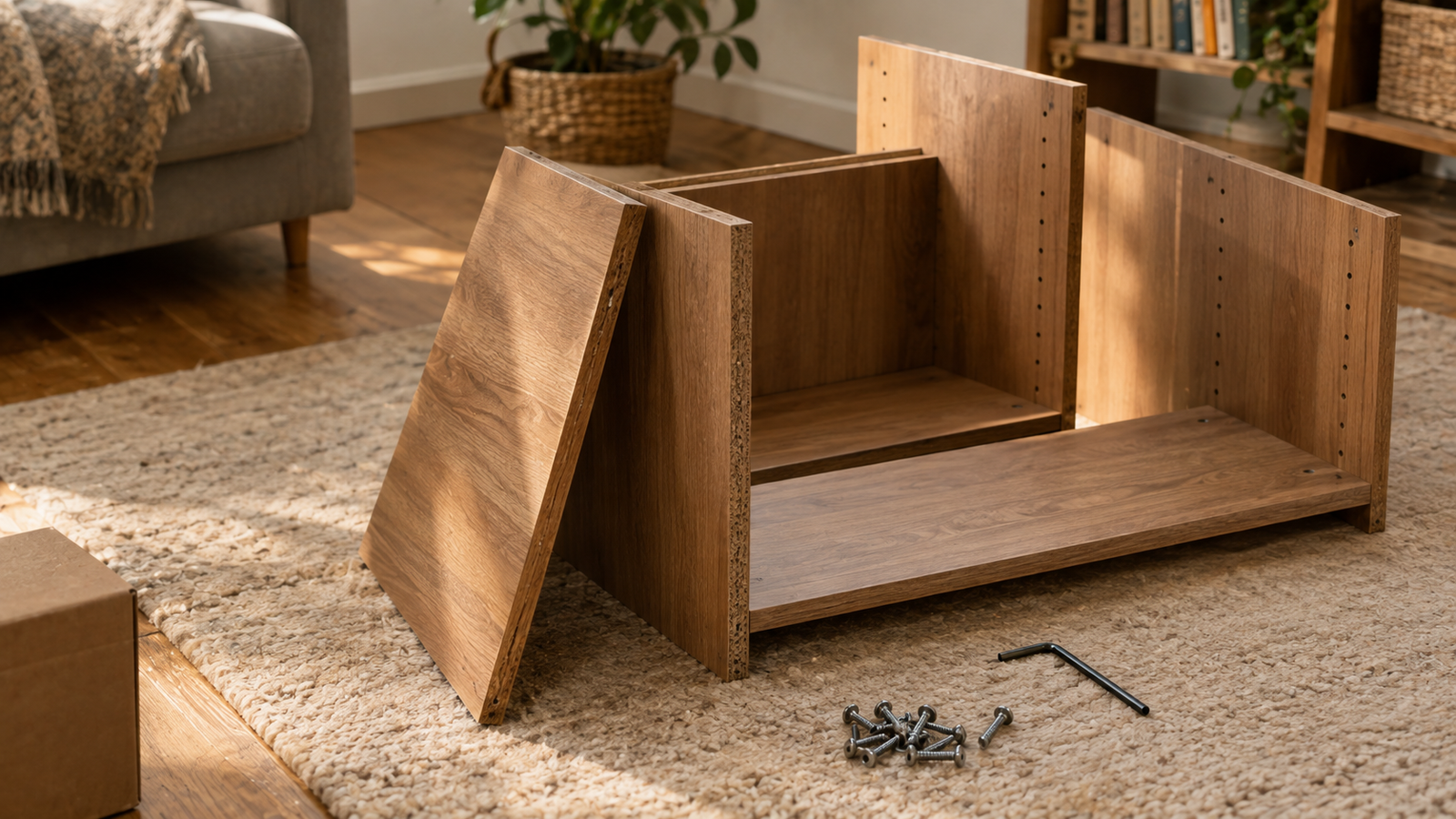
People will pay significantly more for a badly assembled box they built themselves than for an identical, expertly pre-built one — and once you understand why, you start noticing it everywhere.
The Study That Named the Bias
In 2011, researchers Michael Norton (Harvard Business School), Daniel Mochon (then at Yale), and Dan Ariely (Duke) ran a set of experiments to test something simple: does the act of building something yourself change how much you value it, independent of the item's actual quality?
In their core experiment, one group of participants assembled a plain black IKEA storage box (the "Kassett" model) from its included instructions. A second group examined an identical, already-assembled version of the same box. Both groups then stated how much they'd be willing to pay for the item they'd interacted with. The builders were willing to pay 63% more, on average, for their own assembled box than the non-builders were willing to pay for the identical, pre-assembled version — despite there being no actual difference in the underlying product. The researchers repeated similar experiments using origami and Lego sets, finding the same basic pattern each time. They named it the IKEA effect, after the Swedish furniture company whose entire retail model depends on customers doing their own assembly.
It's Not About Being Good At It
The most striking part of the original research: this inflated sense of value didn't depend on the quality of the finished product. Participants in the studies rated their own, often amateurish creations as being nearly comparable in value to expertly made versions of the same object, and expected other people to share that same generous assessment — even when, by any objective measure, their DIY furniture or paper origami was visibly less polished than a professionally made equivalent. Simply having put in the labor was enough to inflate perceived value, independent of whether that labor produced good results.
Why This Happens: Effort Justifies Itself
The IKEA effect builds on a longer-standing psychological idea called effort justification — the tendency for people to increase how much they value an outcome in proportion to how much effort, difficulty, or discomfort went into achieving it. This isn't a new discovery from 2011; earlier researchers, including a well-known 1959 study by Elliot Aronson and Judson Mills on the psychological effects of undergoing a difficult initiation process, had already shown related versions of this pattern decades before Norton, Mochon, and Ariely gave the specific furniture-assembly version of it a catchy name.
The likely underlying mechanism is a kind of psychological self-protection: if you've just spent thirty minutes wrestling with confusing instructions and small screws, concluding "that was a waste of effort and the result is mediocre" is uncomfortable. Concluding "that effort was worth it, and the result is actually pretty good" resolves that discomfort — even if it means adjusting your assessment of the object's actual quality upward to match the effort you already sunk into it.
Where the Effect Breaks Down
The 2011 research also identified a specific and important limit on the IKEA effect: it only shows up when the labor actually results in successfully completing the task. In follow-up experiments, when participants built something and then had it destroyed in front of them, or were unable to finish assembling it at all, the inflated sense of value disappeared entirely. This tells us the effect isn't simply "effort makes anything feel valuable" — it specifically requires the effort to have produced a completed, tangible result you can point to and call "mine."
Where This Shows Up Far Beyond Furniture
Once you understand the mechanism, the IKEA effect turns up in places that have nothing to do with flat-pack furniture. It's part of why people tend to overvalue their own business ideas, code, or creative work relative to outside, more objective assessments of quality. It's part of why customization features — letting a customer build their own pizza, design their own sneaker, or configure their own car options — tend to increase how attached customers feel to the resulting product, sometimes independent of whether the customizations meaningfully improved it. Companies that let users invest even small amounts of effort into a product often see measurably higher perceived value and loyalty as a direct result, a pattern now widely studied and deliberately used in product design.
Why This Is Worth Knowing About Yourself
Understanding the IKEA effect doesn't mean self-built or self-created things are secretly worthless — plenty of DIY work is genuinely good. What it means is that your own sense of how good something is, right after you've put real effort into making it, is systematically biased upward by that effort alone, in a way that has nothing to do with the object's actual merit. That's a useful thing to catch in yourself before pricing something you've made, defending a decision you've invested heavily in, or dismissing outside feedback on work you're personally attached to — because the harder you worked on it, the less reliable your own gut sense of its quality may actually be.
People paid 63% more for a plain box they'd clumsily assembled themselves than for an identical, professionally pre-built one — proof that the effort of making something can inflate how much we value it far more than the actual quality of what we made.