
How Does a Neural Network Actually "Learn"?
Team Ilm Ora · 13 September 2026
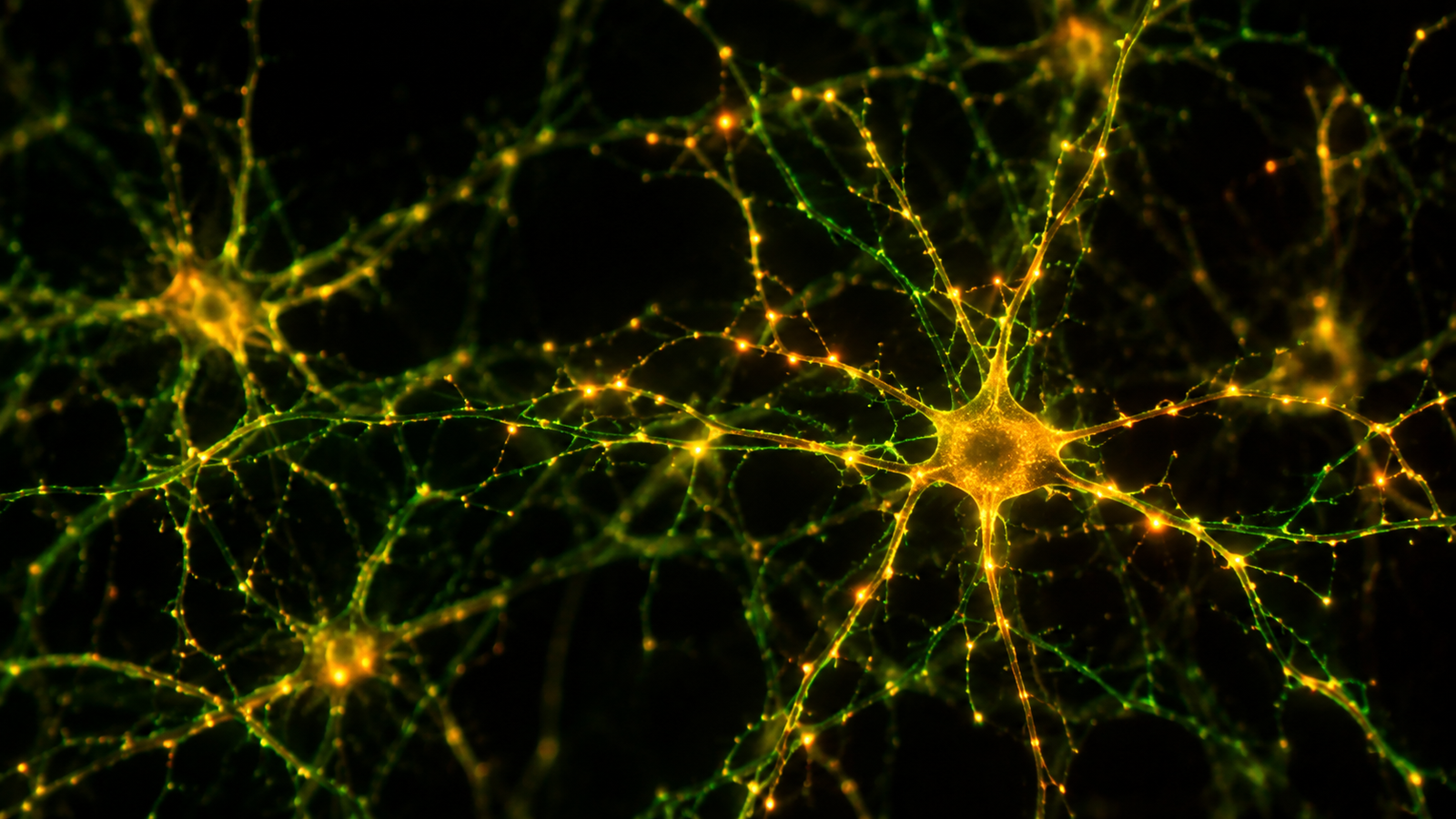
Before it learns anything, a neural network is just a machine that guesses randomly — and there's one specific mathematical trick, discovered in 1986, that's solely responsible for turning that randomness into intelligence.
Starting From Complete Randomness
A neural network is built from layers of simple computing units, loosely inspired by neurons in a biological brain, connected to each other by numerical values called weights. When a network is first created, every one of those weights is typically set to a small random number. At that starting point, the network knows literally nothing — feed it a picture of a cat, and it might confidently guess "airplane," because its internal weights haven't been shaped by anything yet.
Learning, for a neural network, means systematically adjusting every one of those weights — often numbering in the billions for large modern models — so that the network's outputs gradually get closer to being correct. The entire process of "training" an AI model is really just this: repeatedly and carefully changing enormous numbers of numerical values, guided by a specific mathematical procedure.
The Missing Piece: Backpropagation
For a long time, this kind of adjustment was genuinely difficult to do for networks with more than one or two layers, which held back progress in the field for years. The breakthrough came in 1986, when researchers David Rumelhart, Geoffrey Hinton, and Ronald Williams published a paper titled "Learning representations by back-propagating errors" in the journal Nature, describing an algorithm now simply called backpropagation.
Here's the core idea, in plain terms. After a network makes a prediction, you compare that prediction to the correct answer and calculate an "error" — a number representing how wrong the network was. Backpropagation then works backward through the network, layer by layer, using a calculus technique called the chain rule to calculate exactly how much each individual weight, all the way back to the very first layer, contributed to that final error. Once you know how much each weight contributed to the mistake, you know which direction to nudge it, and by roughly how much, to make the network slightly less wrong next time.
Gradient Descent: Walking Downhill in the Dark
The specific process of nudging each weight in the right direction is called gradient descent, and it's often explained with a simple image: imagine standing on a hillside in thick fog, trying to reach the lowest point in the valley, but you can only feel the ground immediately around your feet. You can't see the whole landscape, but you can feel which direction slopes downward from where you're standing right now — so you take a small step in that direction, then feel around again, and repeat.
In a neural network, the "landscape" is a mathematical function representing the total error across all of the network's current guesses, and the network's countless different weights are the "location" on that landscape. Backpropagation calculates the local slope — called the gradient — at the network's current position, and gradient descent takes a small step in the direction that reduces error the most. A setting called the learning rate controls how big each of these steps is: too large, and the network can overshoot and become unstable; too small, and training takes an extremely long time to make meaningful progress.
Why This Has to Happen Millions of Times
A single adjustment of the weights, based on a single example, barely moves the network toward being useful. Real training involves showing the network enormous numbers of examples — sometimes billions, for today's largest models — and repeating this entire predict-measure-error-adjust-weights cycle over and over, incrementally nudging the weights a tiny bit closer to "correct" each time. Over enough repetitions, the network's internal weights gradually organize themselves into patterns that reliably produce useful outputs — not because anyone explicitly programmed in a rule like "a cat has pointed ears," but because the accumulated weight adjustments, across millions of training examples, happened to settle into a configuration that reliably distinguishes cats from everything else.
This is also precisely why training large modern AI models requires such enormous amounts of computing power: each individual weight adjustment is a small, cheap calculation, but doing it correctly across billions of weights, across enormous training datasets, repeated millions of times, adds up to a genuinely massive computational undertaking — which is why serious AI model training runs on specialized hardware for weeks or months at a time, rather than running on an ordinary computer overnight.
What "Learning" Doesn't Mean Here
It's worth being precise about what this process actually produces. A trained neural network hasn't "understood" anything in the way a human understands a concept — it has settled into a specific, extremely complex numerical configuration that happens to produce useful outputs for the kinds of inputs it was trained on. This is why neural networks can fail in strange, distinctly non-human ways on inputs that look unusual or fall outside the pattern of what they were trained on: there's no underlying comprehension to fall back on, just a very sophisticated, thoroughly trained numerical pattern-matcher.
Every modern AI model — from image recognition to chatbots — learns using the same basic trick discovered in a single 1986 paper: repeatedly measuring how wrong its guess was, then nudging billions of internal numbers very slightly in the direction that makes it a little less wrong next time.