Shah Inayat Shaheed and the Peasant Movement of Jhok
Team Ilm Ora · 19 October 2026
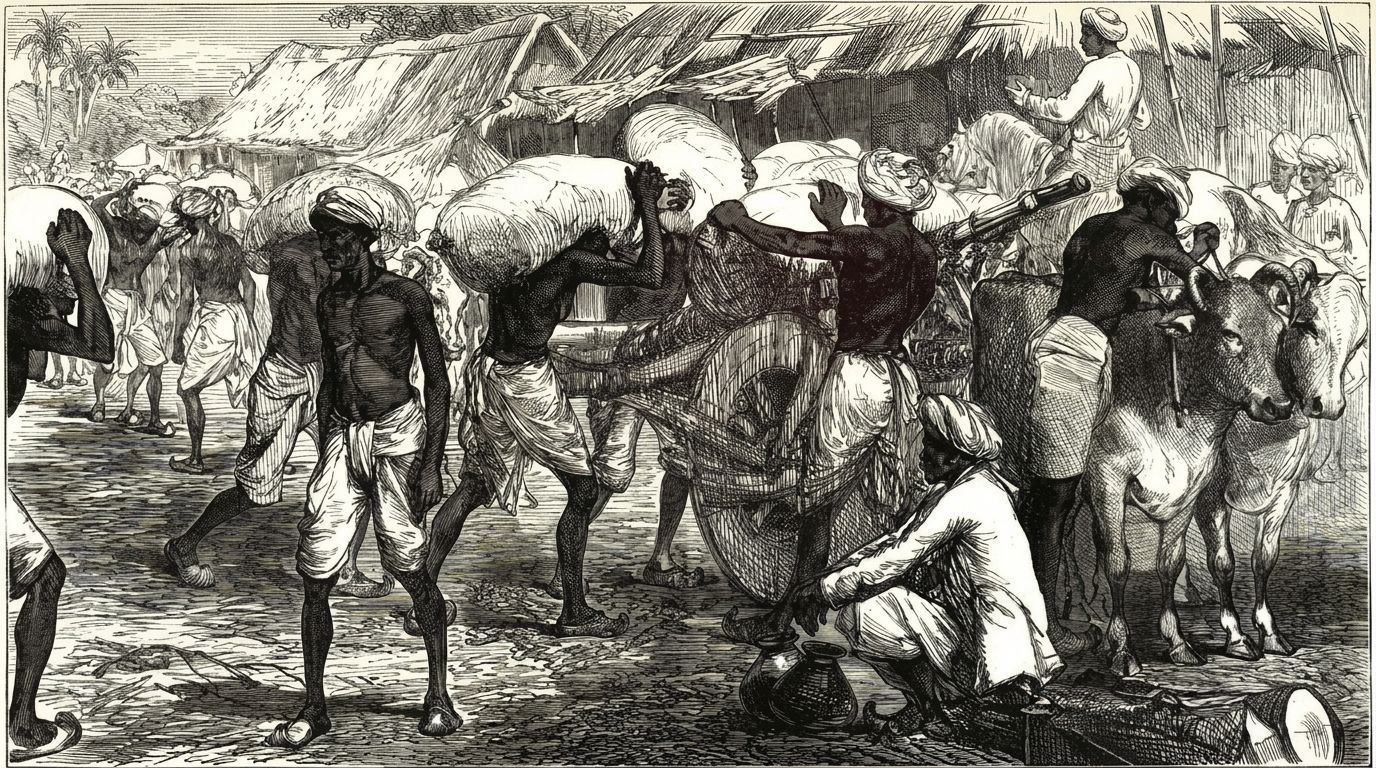
When regional history books discuss eighteenth-century South Asia, they focus almost exclusively on imperial Mughal court intrigues, crumbling dynastic power, and invading Central Asian armies. Completely buried beneath this elite political history is one of the most remarkable social reform movements in Asian history: the rural peasant uprising led by Shah Inayat Shaheed in Sindh. In the early 1700s, long before Karl Marx authored The Communist Manifesto or European thinkers debated land reform, Shah Inayat established a collective farming commune in the town of Jhok based on the radical slogan Jo kherray so khaaye ("He who plows has the primary right to eat"). This challenge to feudal exploitation triggered a brutal military siege by Mughal provincial forces.
The Feudal Exploitation of 18th-Century Sindh
To understand the radical nature of Shah Inayat’s movement, one must look at the oppressive socio-economic structure of rural Sindh in the early 1700s. The agrarian economy was dominated by a coalition of hereditary feudal landlords (zamindars) and orthodox court clerics who exploited landless peasant laborers (hari). Peasant families worked under grueling conditions, surrendering nearly all their agricultural yields to landowning elites in the form of heavy taxes and mandatory tithes. Peasants were trapped in permanent debt bondage, stripped of basic human rights, and treated as disposable property by local feudal lords who maintained private armies to enforce compliance.
The Collective Commune of Jhok: Land to the Tiller
After studying under prominent Sufi scholars in Multan and Delhi, Shah Inayat returned to his ancestral town of Jhok in Sindh, where he initiated a radical social experiment. He pooled his family's landholdings and invited thousands of landless peasant families to join a communal agricultural collective. Under Shah Inayat’s guidance, private land ownership within the commune was abolished, irrigation water was distributed equally according to need, and the crops harvested were shared directly among the working farmers. As news of this prosperous, exploitation-free commune spread across Sindh, thousands of impoverished peasants abandoned their feudal landlords and migrated to Jhok, causing severe labor shortages on nearby feudal estates.
The Mughal State Siege and the Martyrdom of Jhok
Furious at the loss of their forced labor force and terrified by the political threat of a peasant revolution, local feudal landlords and court clerics formed an alliance. They presented false dispatches to the Mughal Emperor Farrukhsiyar in Delhi, framing Shah Inayat as a dangerous political rebel planning an armed overthrow of imperial authority. In late 1717, the Mughal governor of Mian Yar Muhammad Kalhoro dispatched a heavily equipped imperial army to lay siege to the town of Jhok. The commune members, armed mostly with basic agricultural tools, defended their town for four months. Realizing they could not break Jhok by force, the imperial commanders offered a peaceful treaty signed on a Quran, promising safety if Shah Inayat surrendered. When Shah Inayat stepped out to negotiate, he was betrayed, arrested, and executed in January 1718.
The Enduring Legacy of an Early Reformer
The story of Shah Inayat Shaheed proves that South Asian history possesses deep internal traditions of anti-feudal resistance and human rights activism. Long before modern political ideologies reached the region, local visionaries fought and died to defend the dignity of peasant labor.
True historical greatness belongs not to those who build oppressive empires, but to those who stand against feudal power to defend the rights of the working poor.