Controlling Neural Circuits with Light: The 2026 Nobel Prize in Medicine
Team Ilm Ora · 8 October 2026
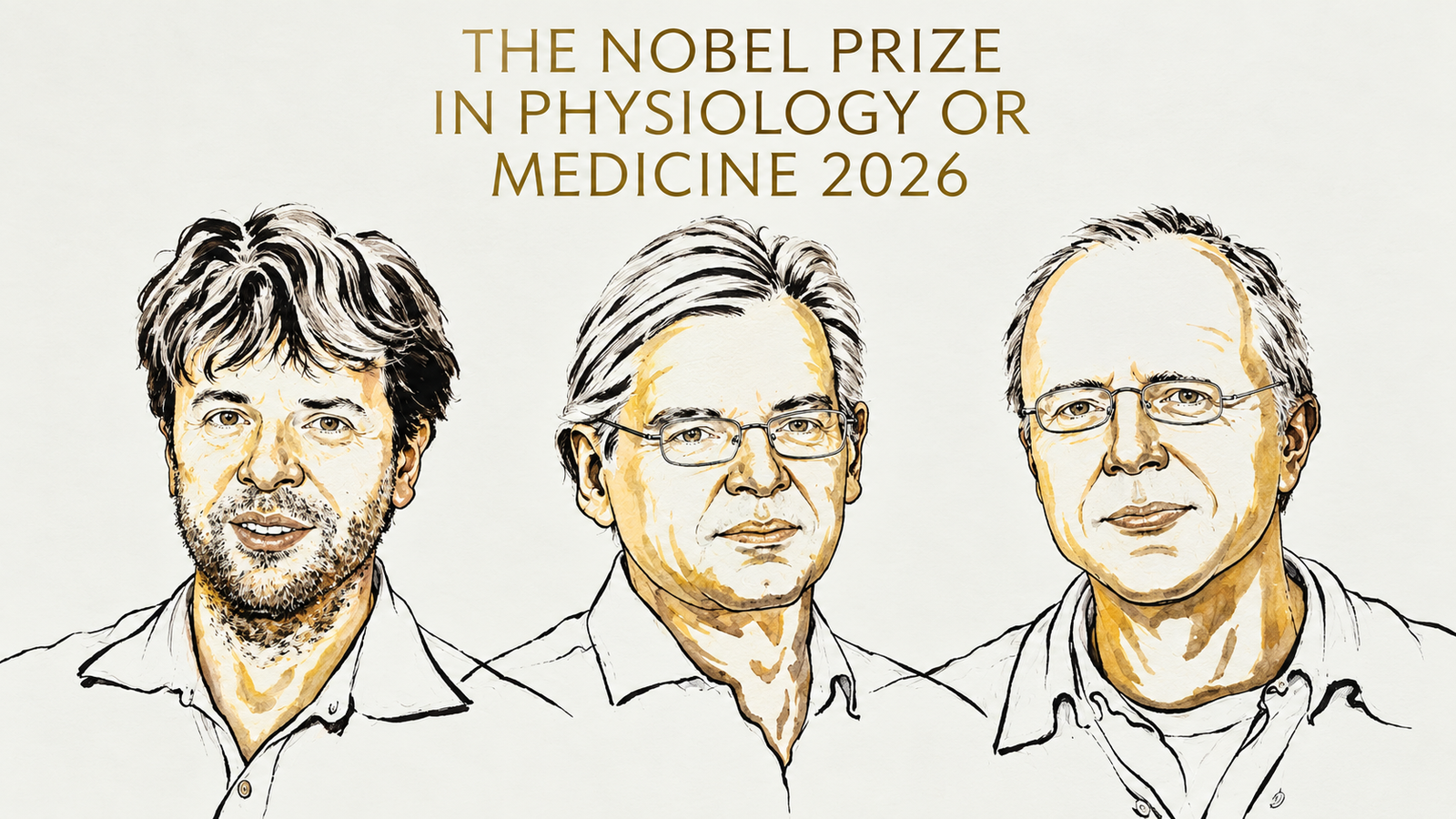
The human brain contains roughly eighty-six billion neurons interconnected in dense, complex electrical networks, making it extraordinarily difficult to isolate which specific cells control particular thoughts, behaviors, or diseases. On October 5, 2026, the Nobel Assembly at Karolinska Institutet awarded the Nobel Prize in Physiology or Medicine to American neuroscientist Karl Deisseroth and German biophysicists Peter Hegemann and Georg Nagel. The trio was honored for discovering light-sensitive algal proteins and adapting them into optogenetics, which is a revolutionary technology that allows researchers to turn individual nerve cells on or off using precise beams of light.
From Green Algae to Molecular Switches
The foundation of this breakthrough began in single-celled green algae, Chlamydomonas reinhardtii. Peter Hegemann and Georg Nagel were investigating how these tiny aquatic organisms detect sunlight to swim toward light sources for photosynthesis. They discovered that the algae possessed specialized light-sensitive proteins embedded in their cell membranes, which they named channelrhodopsins.
Channelrhodopsins function as light-gated ion channels. When hit by a specific wavelength of blue light, the protein instantly changes its physical shape, opening a microscopic pore across the cell membrane. This pore allows positively charged ions, such as sodium and calcium, to flood into the cell, altering its internal electrical charge. Hegemann and Nagel demonstrated that this protein was a self-contained molecular switch that converted optical light directly into an electrical signal.
Transforming Neurons into Light-Responsive Circuits
While Hegemann and Nagel revealed the physical mechanism in algae, neuroscientist and psychiatrist Karl Deisseroth realized its immense potential for studying the mammalian brain. Neurons communicate through rapid electrical impulses called action potentials. Historically, neuroscientists stimulated brain tissue using metal electrodes, but electrodes activate all surrounding cells indiscriminately, making precise mapping impossible.
In 2005, Deisseroth successfully transferred the genetic code for channelrhodopsin into mammalian nerve cells using harmless viral vectors. Once inside, the neurons produced the algal protein and seamlessly incorporated it into their own cell membranes. When Deisseroth delivered a flash of blue light through a micro-fiber optic cable, only the genetically modified neurons fired electrical signals, leaving neighboring un-targeted cells completely undisturbed. By using different proteins that respond to yellow light to inhibit neural firing, researchers gained the ability to switch specific neural circuits on and off at millisecond speeds.
Mapping Mind, Memory, and Neurological Disease
Optogenetics fundamentally transformed neurobiology from an observational field into an active, experimental science. For the first time, scientists could test precise causal relationships between specific neural circuits and complex behaviors.
Using optogenetics, researchers have mapped the exact neural pathways responsible for fear conditioning, deep-sleep cycles, social bonding, and addiction behavior in animal models. In psychiatric research, stimulating specific dopamine-producing circuits has illuminated the underlying mechanics of clinical depression and obsessive-compulsive disorder. Outside the brain, researchers use optogenetics to control cardiac muscle cells, intestinal nerve networks, and even map how cancer cells interact with the surrounding nervous system.
The Horizon for Clinical Human Applications
While optogenetics remains primarily an indispensable laboratory discovery tool, human clinical trials are already applying its core principles. Researchers are using targeted gene therapy to deliver light-sensitive proteins to damaged retinal cells in patients suffering from degenerative blindness, successfully restoring basic visual perception. By decoding the intricate functional wiring of the brain, optogenetics provides the blueprint for developing targeted pharmaceutical therapies and advanced deep-brain electrical stimulation protocols for Parkinson's disease and chronic pain. Deisseroth, Hegemann, and Nagel’s work bridged botany, biophysics, and psychiatry, turning a microscopic algal light sensor into a tool that sheds light on the deepest mysteries of human consciousness.
By borrowing a single light-sensitive protein from humble pond algae, science gained the power to illuminate the dark, uncharted pathways of the human mind.