The Secret Furnace: How Medieval Artisans Mastered the Art of Glass
Team Ilm Ora · 18 October 2026
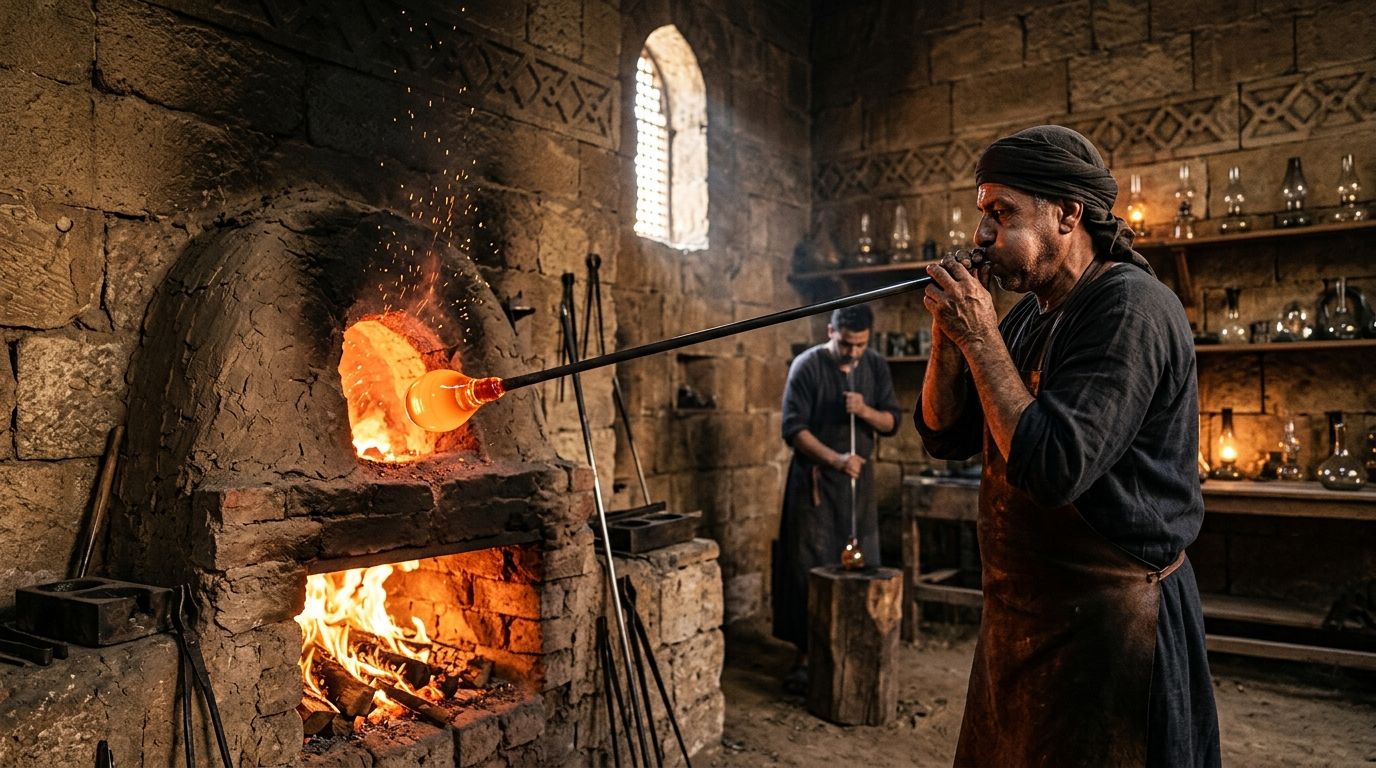
When we look through a camera lens, wear eyeglasses, or gaze through a modern window, we rarely think about the ancient chemistry required to make clear glass. Over a thousand years ago, during the Islamic Golden Age, artisan workshops in cities like Cairo pushed glassmaking past simple beads and cups into a sophisticated science. Led by master craftsmen and supported by royal patronage, including the Fatimid dynasty, these workshops experimented with mineral oxides, furnace temperatures, and blowing techniques. They turned glassmaking from a basic craft into a high-precision chemical art that influenced science, trade, and daily life across the medieval world.
The Chemistry of Sand, Ash, and Mineral Color
Making durable glass requires balancing precise chemical ingredients under extreme heat. Medieval glassmakers combined clean silica sand with natural plant ashes rich in sodium and potassium, which acted as fluxes to lower the melting point of the quartz sand. By adjusting these mineral ratios, craftsmen controlled whether the finished glass would be flexible enough to shape or hard enough to resist cracking. To create brilliant colors, they introduced metal oxides into the molten mixture. Adding tiny amounts of cobalt produced deep blues, copper created vibrant greens and reds, and manganese eliminated unwanted green tints to create crystal-clear glass. This deliberate manipulation of chemical reactions proved that medieval artisans understood early material science long before modern textbooks defined it.
The Engineering of High Heat Furnaces
Achieving the temperatures required to melt quartz sand—often exceeding eleven hundred degrees Celsius—demanded remarkable engineering. Medieval glassmakers designed multi-chambered clay furnaces fueled by carefully selected woods that burned hot and slow. The lower chamber housed the roaring fire, while upper chambers maintained steady, controlled heat for annealing, a slow cooling process that prevents glass from shattering under internal stress. These furnaces utilized natural draft ventilation channels built into stone walls to maximize oxygen flow. By improving thermal insulation and airflow, craftsmen could maintain stable high temperatures for days at a time, allowing for larger batches and more complex, delicate vessel shapes.
Blowing, Cutting, and Shaping Techniques
Beyond chemical recipes, medieval artisans perfected physical shaping techniques that revolutionized production speed and design complexity. Using long hollow iron pipes, glassblowers gathered molten glass from the furnace and inflated it with controlled puffs of air, spinning and molding the glowing material against iron and wooden blocks. They mastered free-blowing, mold-blowing, and glass-cutting, carving intricate geometric patterns into the surface after the vessel cooled. This precision allowed them to create thin-walled lamps, perfume flasks, and decorative tableware that were traded from the Mediterranean all the way to China, serving both practical medical needs and royal luxury courts.
The Legacy of Medieval Material Science
The innovations developed in these medieval workshops did much more than supply luxury goods; they built the material infrastructure for future science. The clear optical glass produced by these artisans eventually enabled the invention of microscopes and telescopes centuries later. By combining raw experimentation, chemical mastery, and furnace engineering, medieval glassmakers proved that practical trade work and rigorous inquiry go hand in hand. Their techniques remind us that the everyday tools we rely on today rest on centuries of patient, hands-on human ingenuity.
The history of technology is written not just in modern computer labs, but in the glowing kilns of ancient artisans who turned sand into light.