How the Meiji Restoration Modernized Japan
Team Ilm Ora · 27 October 2026
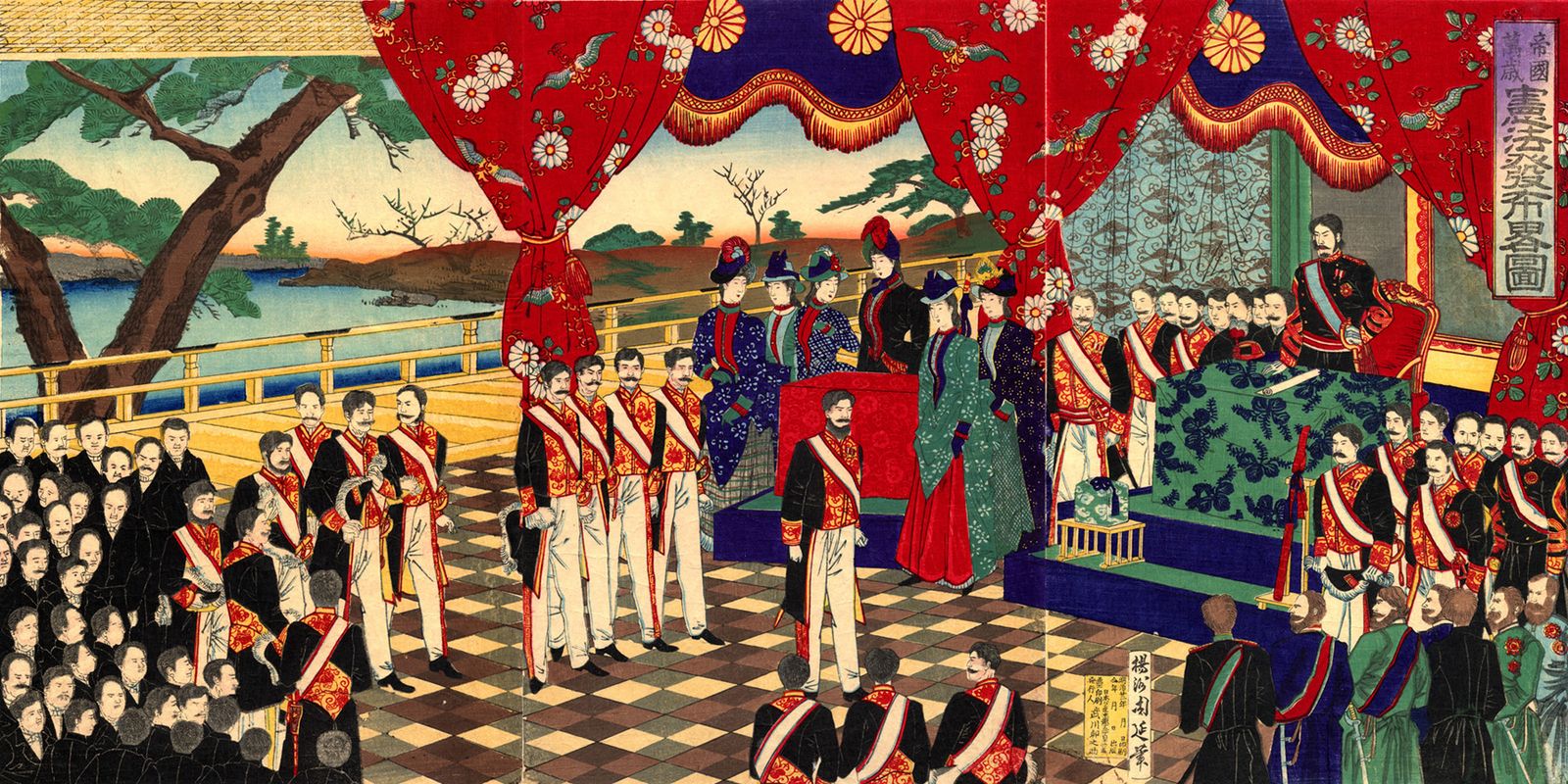
For over two hundred and fifty years, Japan lived under the strict isolationist rule of the Tokugawa shogunate, closing its borders to foreign trade and keeping its feudal samurai society frozen in time. That isolation ended abruptly in 1853 when armed American warships sailed into Tokyo Bay, forcing Japan to open its ports under unequal treaties. Recognizing that military weakness invited foreign colonization, visionary young reformers overthrew the shogunate in 1868 and launched the Meiji Restoration. In a breathtaking national sprint, Japan industrialized its economy, modernized its legal code, and built a modern military, transforming from a feudal society into a global industrial power in a single generation.
Overthrowing Feudalism and Unifying the Nation
To build a modern industrial state, the new Meiji government had to dismantle Japan's rigid feudal caste system. Reformers abolished the privileges of the samurai warrior class, unified the national tax system into predictable cash payments, and established a centralized government loyal directly to the Emperor. Universal public education was introduced nationwide, ensuring that every citizen learned technical skills, literacy, and modern sciences. By uniting a fractured feudal population under a shared national purpose, Japan unlocked the collective human capital of its entire society.
Adopting Western Technology While Preserving Culture
Japan's modernization strategy was guided by a famous national slogan: "Japanese spirit, Western technology." Instead of blindly copying Western culture, the Meiji government sent scholars, engineers, and diplomats across Europe and the United States to study advanced manufacturing, railway engineering, naval warfare, and parliamentary law. They invited foreign experts to help build textile mills, shipyards, and steel foundries in Tokyo and Osaka, while rapidly training local engineers to take over operations. Once domestic factories were running efficiently, the state privatized many industrial enterprises, fueling a competitive capitalist boom.
Military Strength and Imperial Ambitions
The rapid industrialization allowed Japan to renegotiate the humiliating unequal treaties forced upon it by Western powers, establishing itself as an equal player on the global stage. However, fueled by a desire to secure raw materials like coal and iron ore, Japan soon adopted the imperialist expansionist playbook of Western nations, launching successful military campaigns in Asia that set the tragic stage for twentieth-century global conflict.
A Masterclass in National Transformation
The Meiji Restoration remains one of history's most striking examples of rapid national reinvention. It proved that a nation facing existential foreign threats can successfully modernize its economy and infrastructure through disciplined leadership, universal education, and strategic adoption of global technology.
When nations face existential collapse, survival belongs not to those who cling blindly to the past, but to those who master modern tools while honoring their cultural soul.