How Neuroplasticity Allows the Brain to Rewire
Team Ilm Ora · 19 October 2026
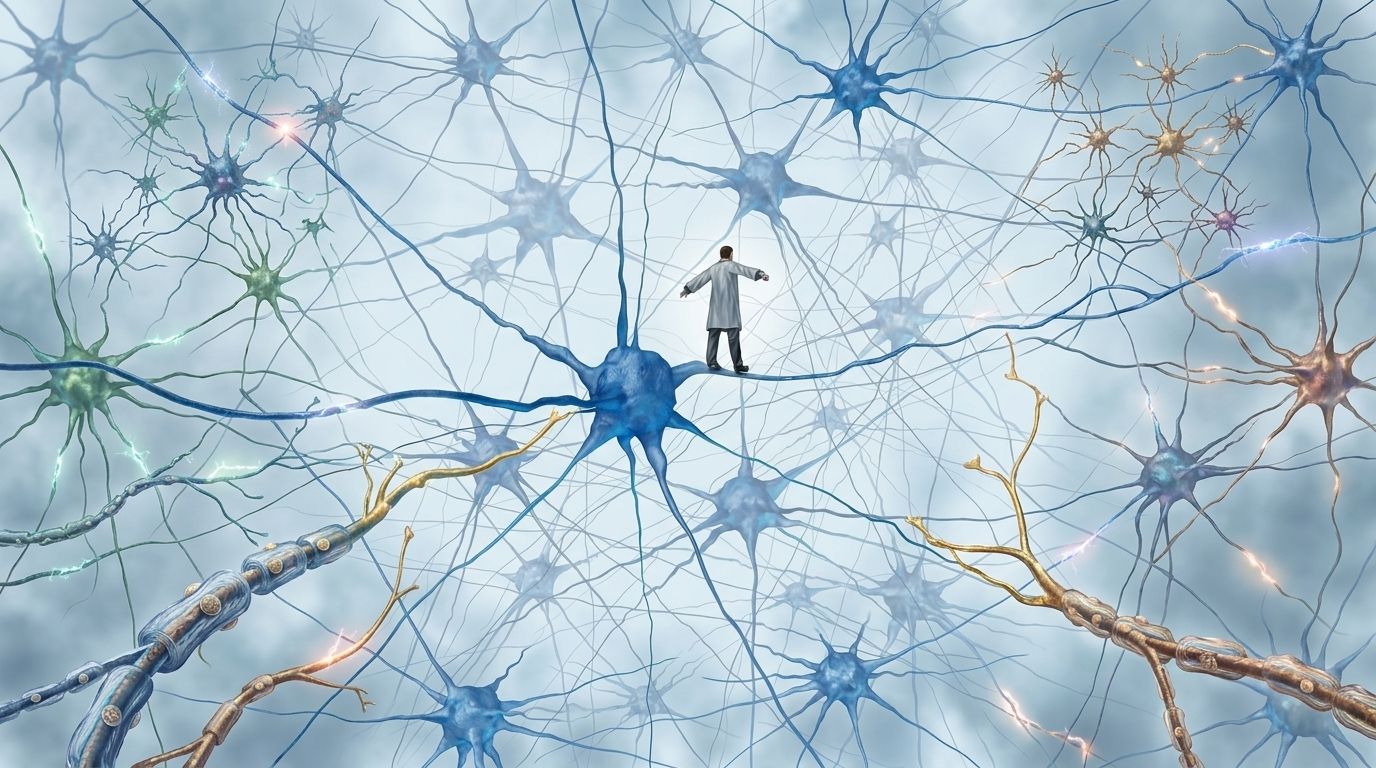
For most of the twentieth century, standard neuroscience taught a rigid dogma: the human brain stopped developing shortly after childhood, locking into a fixed physical structure that could never be repaired or altered. If brain cells died from injury or aging, they were gone forever. That gloomy medical consensus was shattered by the discovery of neuroplasticity, the brain's remarkable lifelong ability to reorganize itself by forming new neural connections, pruning unused pathways, and adapting dynamically to learning, environmental changes, and physical trauma recovery.
Cellular Mechanics of Neural Adaptation
To understand neuroplasticity, we must look at how neurons communicate across biological structures. Inside the brain, billions of nerve cells communicate across tiny gaps called synapses by firing electrical and chemical signals. Whenever you learn a new skill, practice a musical instrument, or form a new memory, neurons fire together repeatedly. According to the foundational neurological rule known as Hebbian theory, neurons that fire together, wire together. Repeated mental or physical practice strengthens the synaptic connections between those neurons, coating them in fatty myelin insulation to make signal transmission faster and more efficient. Conversely, pathways that go unused are weakened and eventually pruned away.
Stroke Recovery and Brain Rehabilitation
The medical implications of neuroplasticity have revolutionized modern rehabilitation medicine and neurology. When a patient suffers a stroke that damages a specific region of the brain controlling arm movement, older medical doctrines assumed the patient's impairment was permanent. Modern neurorehabilitation utilizes neuroplastic principles through intensive, repetitive physical therapy. By forcing the brain to practice motor tasks, healthy neighboring neurons form brand-new collateral pathways, effectively taking over the workload of the damaged brain tissue and restoring lost bodily functions.
Lifelong Learning and Cognitive Reserve
Neuroplasticity proves that the human brain remains remarkably adaptable well into old age. Engaging in novel intellectual challenges, learning foreign languages, mastering musical instruments, and maintaining physical exercise stimulate the release of growth factors like brain-derived neurotrophic factor, which encourages new neuron growth in memory centers like the hippocampus. This lifelong adaptability offers profound hope for maintaining cognitive resilience, mental sharpness, and emotional well-being throughout life.
Redefining Human Cognitive Potential
The discovery of neuroplasticity reframes our understanding of human potential. We are not trapped inside rigid biological hardware boxes; our minds possess the biological power to reshape their own physical architecture through intentional practice and experience.
Our brains are not static monuments cast in stone, but living gardens capable of cultivating new growth, healing deep wounds, and adapting at any stage of life.