Beyond Friction: The Physics Behind the Next-Generation Tesla Roadster
Team Ilm Ora · 17 October 2026
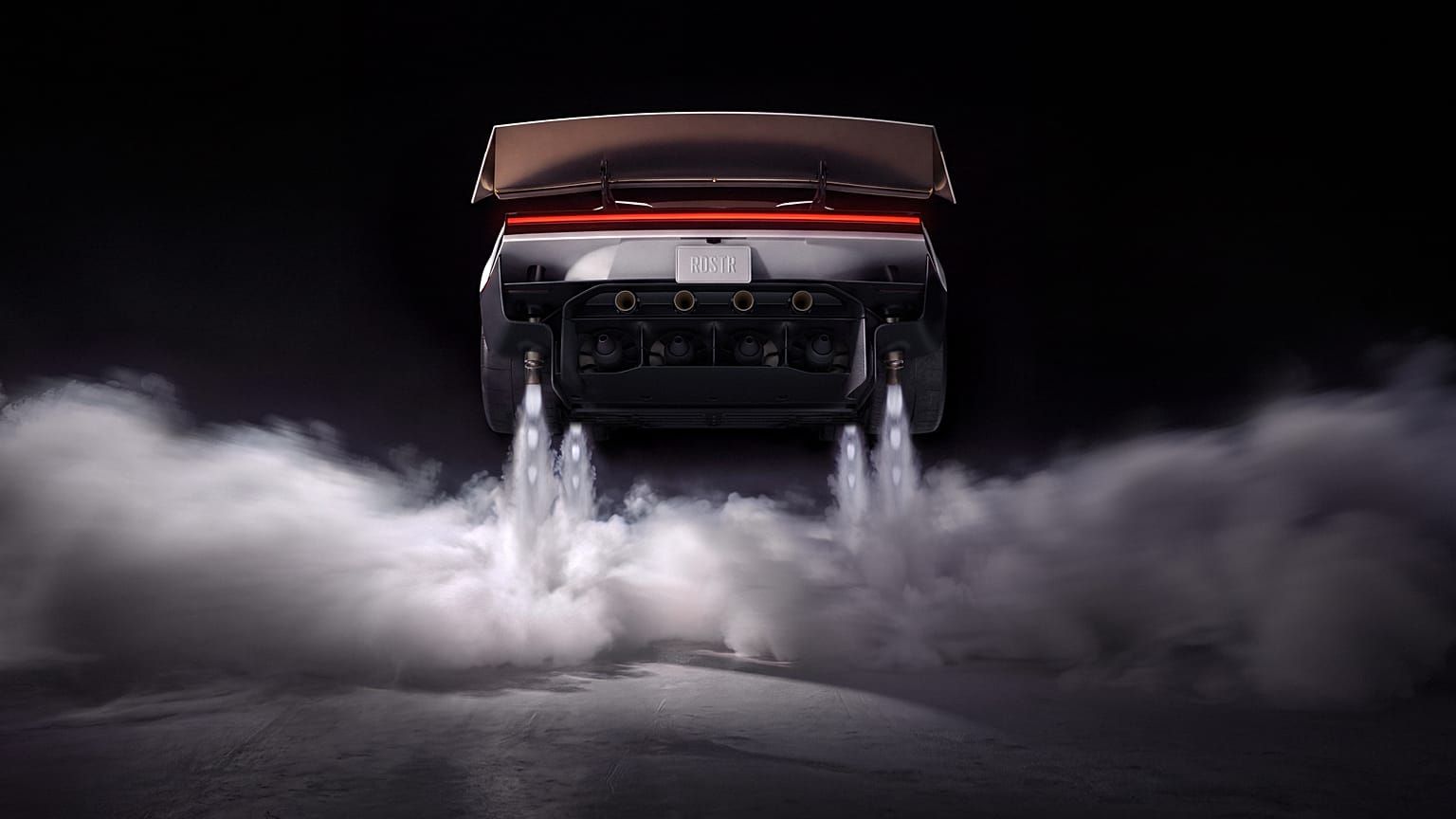
For over a century, automotive acceleration was restricted by two physical factors: engine horsepower and mechanical tire grip. When a vehicle attempts to launch from a complete stop, its maximum acceleration depends entirely on the frictional force between its rubber tires and the asphalt road. On October 15, 2026, Tesla revealed the production design and technical architecture of the second-generation Tesla Roadster, featuring three performance configurations: Performance, Thrust, and the invite-only Rocket variant. By integrating active ground-effect vacuum suction fans and high-pressure cold-gas thrusters developed alongside aerospace engineers, the vehicle moves past traditional tire friction limits to demonstrate launch times under one second. Understanding this machine requires exploring how electric drive units, fluid dynamics, and pneumatic reaction forces intersect in terrestrial dynamics.
Overcoming Frictional Limits with Electromechanical Torque
In classical physics, maximum horizontal acceleration along a road surface is governed by Newton's second law of motion ($F = ma$) and Coulomb's law of dry friction. The friction force ($F_{\text{friction}}$) generated by a tire equals the friction coefficient ($\mu$) multiplied by the normal force ($F_N$), which is the downward weight pressing the vehicle onto the pavement. On standard rubber and asphalt, standard tires hit a physical traction ceiling, limiting sub-two-second acceleration unless extra downward force is applied.The base Performance version of the new Roadster addresses torque delivery using high-voltage tri-motor electric drive units. In an electric motor, high-density electrical current passes through copper stator windings to generate rotating magnetic fields, which turn the rotor instantly. Unlike internal combustion engines that must build rotational speed to reach peak output, electric drive units deliver maximum torque at zero revolutions per minute. Microsecond computer feedback systems monitor wheel rotation continuously, adjusting electrical current to each independent wheel to maintain maximum static friction and prevent wheel spin.
Active Ground-Effect Suction and Aerodynamic Pressure
To increase normal force ($F_N$) without adding heavy physical weight, the Roadster utilizes an active ground-effect suction system built into the chassis. Ground effect operates on Bernoulli's principle of fluid dynamics, which dictates that an increase in fluid velocity creates a simultaneous drop in static fluid pressure. The vehicle uses high-speed internal electric suction fans to pull air out from beneath the sealed carbon-fiber floorpan, exhausting it through rear diffusers.This rapid air evacuation creates a localized low-pressure vacuum zone directly under the car relative to the higher atmospheric pressure pushing down on top of the vehicle. This pressure differential effectively sucks the chassis toward the pavement. By generating thousands of pounds of artificial downward normal force while completely stationary, the tires achieve unprecedented traction, enabling the road-going Performance variant to accelerate from 0 to 60 mph in under 1.6 seconds.
Cold-Gas Thrusters and Pneumatic Momentum Transfer
When mechanical tire traction reaches its absolute theoretical ceiling, further acceleration requires non-contact propulsion systems that do not rely on rubber meeting the road. The Thrust and Rocket variants introduce a cold-gas thruster system developed using aerospace propulsion technology. Cold-gas thrusters function by storing compressed air or nitrogen inside composite composite overwrapped pressure vessels at extreme pressures.
When high-speed solenoid valves open, compressed gas expands rapidly through convergent-divergent nozzles mounted around the chassis. According to Newton's third law of motion, releasing high-velocity gas mass in one direction generates an immediate, equal, and opposite reaction force against the vehicle. The Thrust version places rear-facing thrusters to assist forward launch, pushing 0 to 60 mph acceleration under 0.9 seconds. The single-seat Rocket version places thrusters around the perimeter for omnidirectional impulse vectoring, enabling brief controlled levitation maneuvers and launch times under 0.59 seconds.
Thermal Dynamics and High-Voltage Power Storage
Sustaining megawatt-level power discharges from an onboard battery pack to feed high-output motors and electric suction fans creates extreme thermodynamic challenges. When massive electrical current flows through internal battery connections, electrical resistance converts a portion of that energy into intense waste heat, governed by Joule heating laws ($P = I^2 R$). Uncontrolled thermal buildup degrades cell chemistry, causes voltage sag, and risks structural thermal runaway.To minimize heat generation during rapid launches, high-performance electric platforms utilize 800-volt to 1,000-volt electrical architectures. Doubling the operating voltage of an electric powertrain cuts the required current ($I$) in half for the same total power output ($P$), which reduces Joule resistive heating losses by seventy-five percent. Combined with direct liquid-dielectric cooling channels circulating non-conductive fluid around individual battery cells, the system delivers sustained power output without thermal degradation.
True engineering innovation occurs when we stop trying to optimize old mechanical limits and begin applying fundamental physical forces in entirely new ways.