Pens of Resistance: Literature and Social Realism in the Progressive Writers' Movement
Team Ilm Ora · 17 October 2026
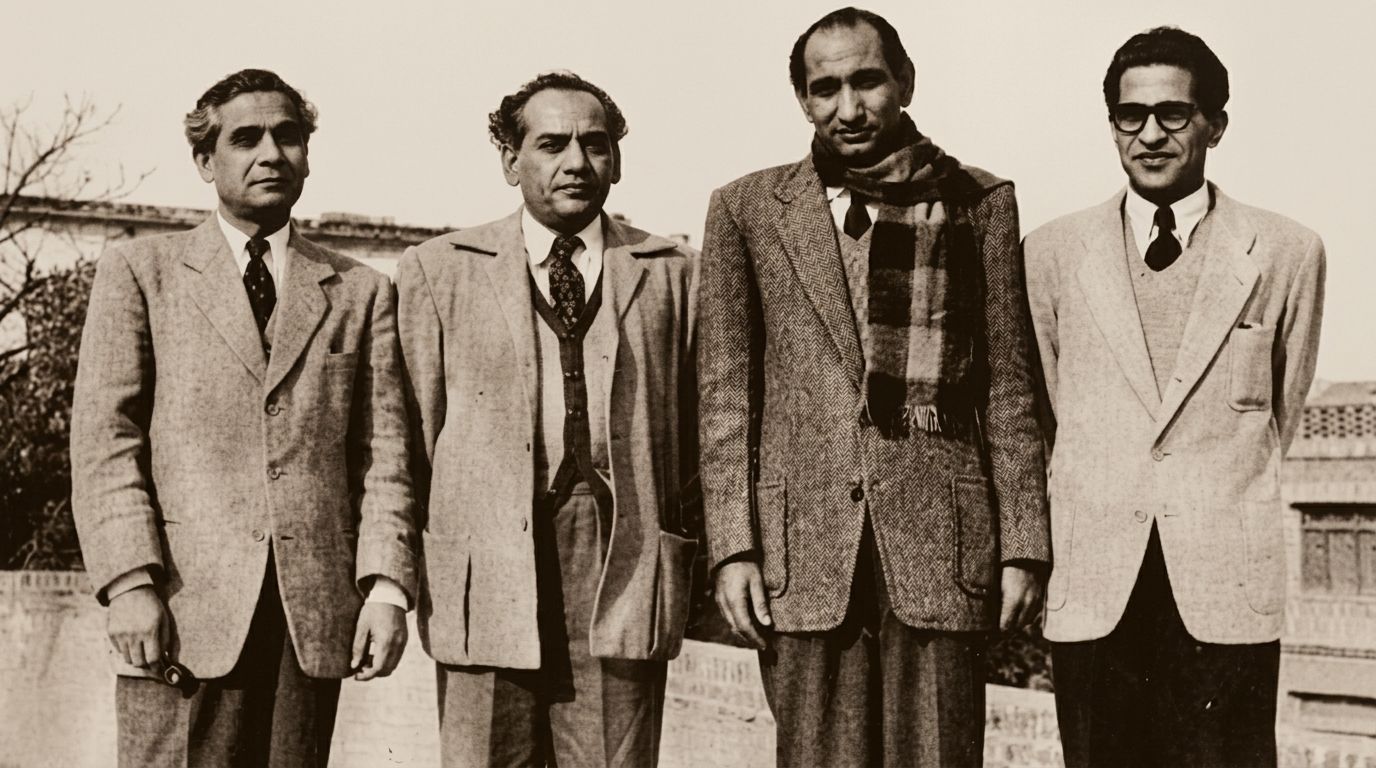
In 1932, a controversial anthology of four Urdu short stories titled Angarey (Burning Embers) was published in Lucknow, sending shockwaves through the literary landscape of British-colonized South Asia. Authored by a group of young intellectuals including Sajjad Zaheer, Ahmed Ali, Rashid Jahan, and Mahmud-uz-Zafar, the book rejected traditional romantic themes to expose religious hypocrisy, patriarchy, and economic exploitation. Four years later, in 1936, this radical artistic vision formalised into the Progressive Writers' Movement (Anjuman Taraqqi Pasand Musannifeen) at its inaugural conference in Lucknow, presided over by the legendary novelist Munshi Premchand. The movement re-engineered Urdu and regional literature, turning creative writing into a powerful force for social realism and political transformation.
Rejection of Classic Idealism for Literary Realism
Prior to the 1930s, classical Urdu prose and poetry were dominated by formal aesthetic conventions, spiritual allegories, and courtly romanticism. While classical forms possessed extraordinary poetic elegance, the Progressive movement argued that art must serve an active social function. They adopted social realism, a literary framework that represents daily working-class life, socio-economic struggles, and systemic injustices without romantic embellishment. In his landmark presidential address, Premchand declared that literature must change its standard of beauty. Authors stopped writing exclusively about elite patrons or abstract, idealized lovers. Instead, writers like Saadat Hasan Manto, Ismat Chughtai, Rajinder Singh Bedi, and Krishan Chander began populating their stories with peasants, factory workers, displaced migrants, and marginalized urban women, using authentic regional dialogue to reveal the harsh realities of subcontinental society.
Structural Innovations in the Urdu Short Story and Nazm
The Progressive Movement catalyzed structural innovations across narrative prose and free-verse poetry. Writers perfected the modern Urdu short story (afsana), moving away from long, moralizing fables toward concise psychological studies that captured human emotions under economic stress.
Concurrently, poets like Faiz Ahmed Faiz, Majrooh Sultanpuri, Ali Sardar Jafri, and Sahir Ludhianvi transformed the classical ghazal and nazm. The ghazal, traditionally a poetic form composed of autonomous rhyming couplets focused on love and longing, was re-engineered by Faiz to weave political struggle directly into classical metaphors. In Faiz’s poetry, traditional terms representing the beloved (mahbub) were repurposed to symbolize liberation and social justice. The oppressor or rival (raqib) became a representation of colonial and feudal hegemony. The traditional cage (qafas) evolved into a metaphor for systemic socio-political bondage, while the garden (gulshan) came to represent an equitable, free society. By integrating these revolutionary meanings directly into classical aesthetic structures, progressive poets preserved poetic beauty while advancing human rights.
Literature as a Weapon Against Feudalism and Colonialism
The political philosophy of the Progressive Movement was grounded in anti-colonial resistance and anti-feudal critique. Authors viewed British colonial rule and domestic feudalism as twin systems of oppression that impoverished South Asia. Through literary journals like Naya Adab, progressive writers published sharp essays and narrative fiction dissecting land tenancy rights, forced labor, and industrial exploitation.
During the catastrophic Bengal Famine of 1943 and the turbulent Partition of 1947, progressive writers produced some of the most enduring humanist literature of the twentieth century. Manto’s iconic short stories, including Toba Tek Singh and Khol Do, stripped away political rhetoric to reveal the raw human trauma, displacement, and psychological absurdity of national border divisions, forcing readers to confront the moral cost of ideological violence.
The Global Legacy of Subcontinental Realism
The influence of the Progressive Writers' Movement extended far beyond Urdu, inspiring parallel literary movements in Hindi, Bengali, Punjabi, Sindhi, and Malayalam literature. It built a bridge between South Asian intellectuals and global anti-colonial arts movements across Asia, Africa, and Latin America.
By demonstrating that creative literature could preserve artistic excellence while fighting for human rights, the Progressive writers permanently broadened the horizon of South Asian literature. Their work established a enduring tradition of literary dissent, ensuring that future generations of writers would continue using poetry and narrative prose to critique power, defend human dignity, and envision a more just world.
True art does not offer a quiet escape from the struggles of the world, but holds up a clear mirror that demands we change it.