
Starship Reaches Orbit for the First Time and Releases 26 Starlink Satellites
Team Ilm Ora · 30 September 2026
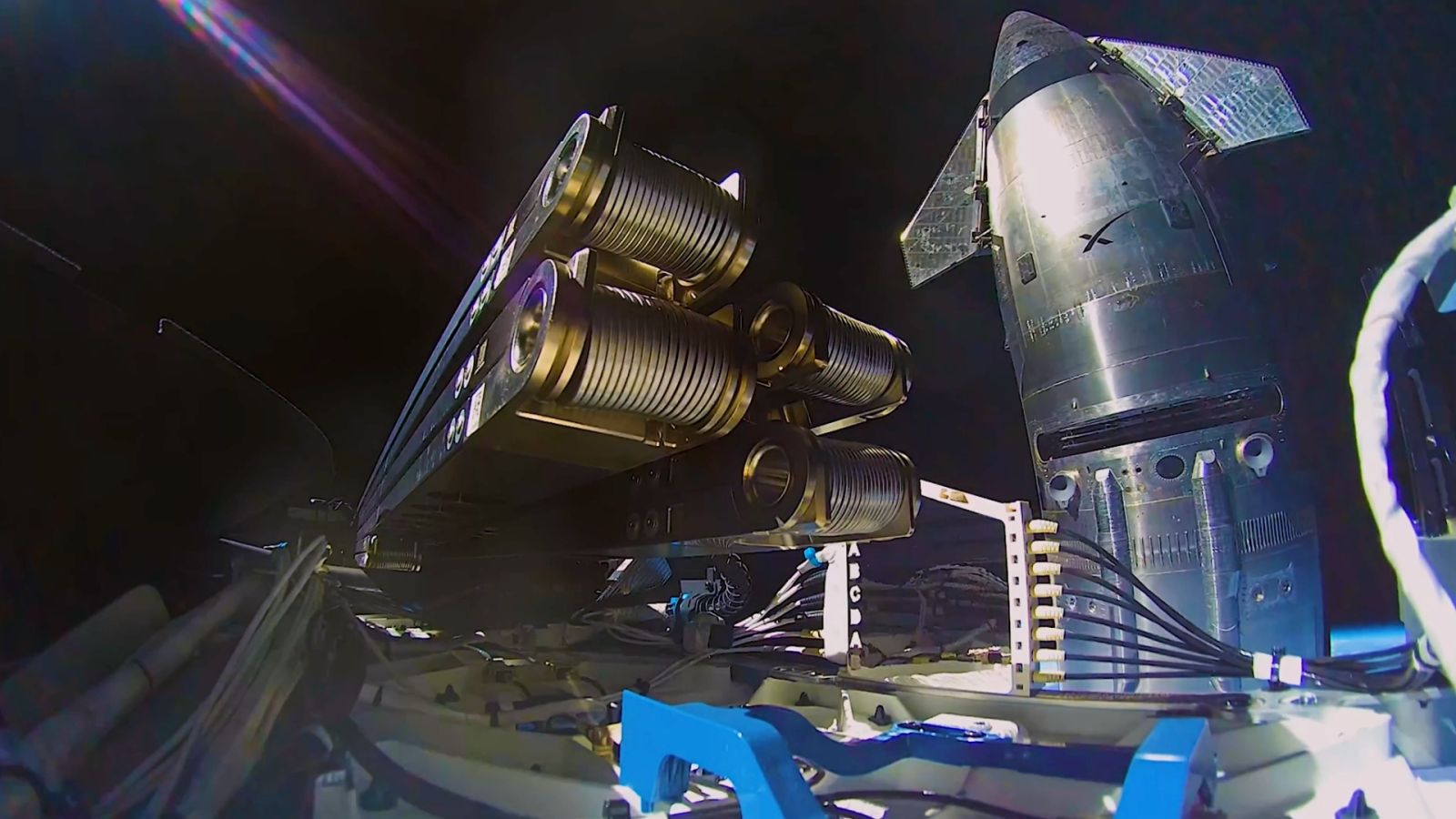
Thirteen times SpaceX launched its giant Starship rocket on a test flight, and thirteen times it fell short of orbit. The fourteenth flight, on 28 September 2026, was different. Starship reached orbit and released 26 of the company’s newest Starlink internet satellites. It got there only after an engine failed in the first minutes and the launch team had to decide whether to give up. This is the story of that morning, and why it matters for the future of spaceflight.
The morning it almost didn’t happen
Starship lifted off from Starbase in South Texas at 7:48 a.m. local time. It is the biggest rocket ever built, in two parts: a huge booster called Super Heavy, and the Starship spacecraft on top, called the ship. About seven minutes later the booster came back down for a controlled splashdown in the Gulf of Mexico. The ship kept climbing, and then trouble came. One of its six engines shut down, and a SpaceX spokesperson announced that the orbital attempt was off. Within minutes, flight controllers changed their minds and said the ship was cleared to continue. To see why that decision mattered, you have to know what an orbit is. Getting to space is the easy part, because space begins only about 100 kilometres up. The hard part is speed. To stay up there, a spacecraft must travel sideways at roughly 28,000 kilometres per hour. At that speed it is still falling toward Earth, but the ground curves away beneath it as fast as it falls, so it never lands. That is all an orbit is: falling forever and missing. Every earlier Starship flight was suborbital, meaning it flew up and came back down. About 25 minutes after liftoff, the ship fired a single engine briefly and reached that speed. Mission control confirmed Starship was in orbit.
What it carried, and why it needed a rocket this big
The cargo was 26 Starlink satellites, which are small spacecraft that beam internet down to people on Earth. These were the newest generation, called V3. They are bigger and more powerful than the older ones, and they are too large to fit on SpaceX’s regular rocket, the Falcon 9. SpaceX says the 26 together add roughly ten times the network capacity of a Falcon 9 launch carrying the older satellites. Starship has no normal cargo door. Instead it pushes the satellites out through a narrow slot in its side, one after another, like a Pez dispenser. Starting about 34 minutes into the flight, it released all 26 over roughly half an hour. This was the real breakthrough. On the previous flight in July, Starship had released satellites too, but on a suborbital path, so they simply fell back to Earth. This time they could stay in space and start working. Three of them also carried cameras to photograph the ship’s heat shield, the tiles that protect it from burning up on the way back down. SpaceX will study those pictures to build a ship that can be reused quickly. The flight was cut short. The plan was almost ten hours in the air, but controllers brought the ship home after just over three. It splashed down intact in the Pacific, then toppled over and exploded when it hit the water. That was a fitting end to a dramatic day, and it left some work unfinished.
What still has to be proven
Starship is a real step forward, but SpaceX’s bigger plans depend on things it hasn’t done yet. The company wants to catch both the booster and the ship with giant mechanical arms on the launch tower, so they can fly again within days. It has caught the booster before, but never the ship. Flying to the moon is harder still. A rocket can’t carry enough fuel to leave Earth’s orbit and land on the moon, so tanker ships must meet the lander in orbit and pour fuel into it. No Starship has refuelled another in orbit yet, and each moon lander could need as many as 15 tanker launches. The rules are changing as well. SpaceX has asked the US aviation regulator, the FAA, to allow up to 456 Starship launches a year from Starbase, up from the current limit of 25, and the regulator has begun an environmental review. NASA has chosen Starship as the lander for its Artemis moon programme, with a first Artemis flight in Earth orbit planned for mid-2027. Whether those plans hold depends on the next few flights.
Reaching orbit shows that a rocket can get to space. The harder test is whether it can do it again and again, safely and cheaply. Flight 14 answered the first question, and the second is still open.